Treatment
Sciatica
That sharp, shooting pain down the back of your leg has a source, and finding it is the first step to calming the sciatic nerve for good.
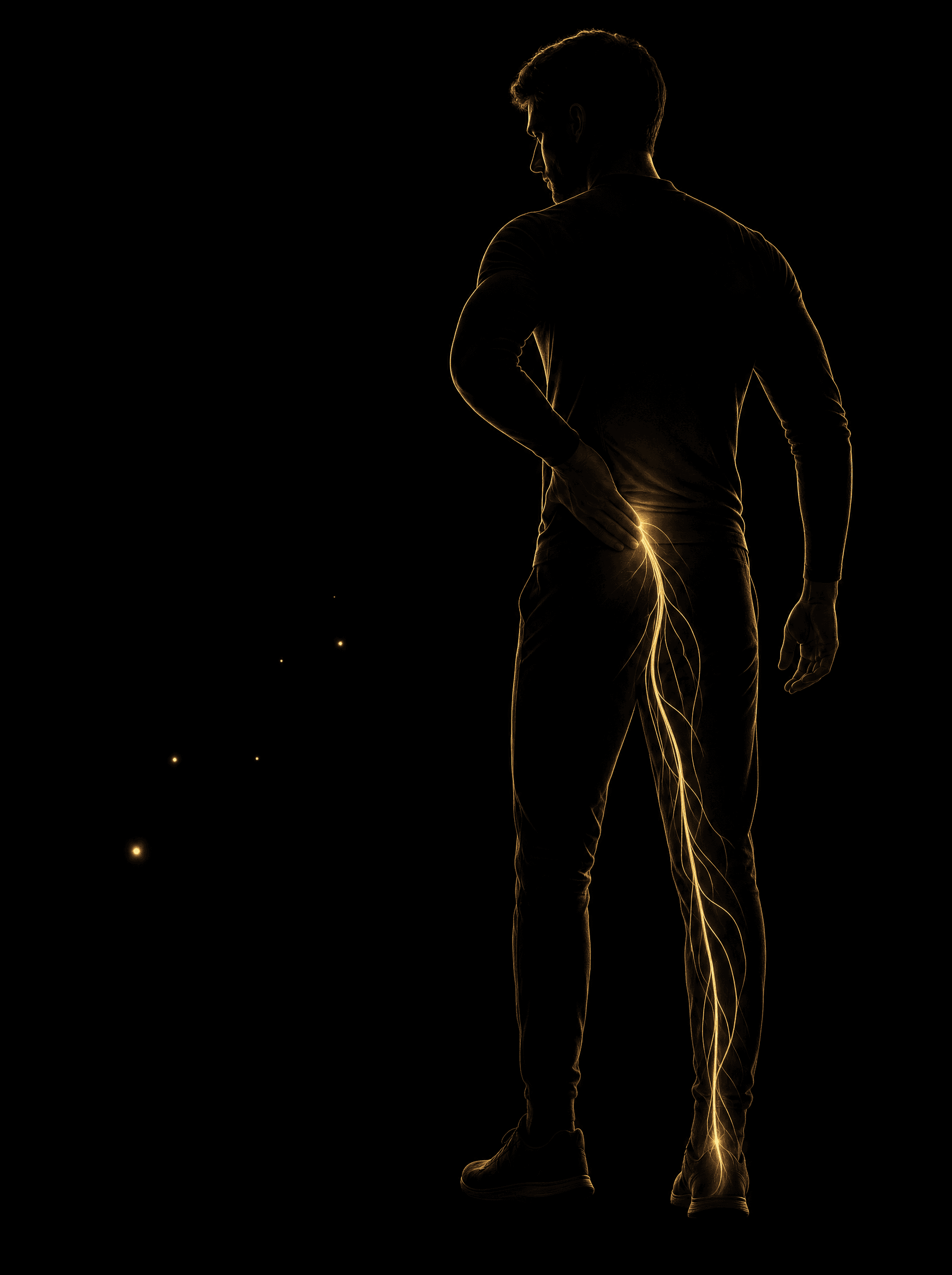
Sciatica is pain, tingling, or weakness that travels from the lower back or buttock down through the leg, following the path of the sciatic nerve. It is a symptom of an underlying problem, not a diagnosis on its own. Finding what is actually pressing on the nerve is the first and most important step.
Care starts by pinpointing the true source, which is often a disc, a spinal joint, or a tight muscle irritating the nerve. Treatment then eases that specific pressure using methods like adjustments, decompression, and targeted exercises. As the nerve gets the room it needs, the signals that cause your leg pain settle down.
As the pressure lifts, the burning, shooting pain usually eases and movement comes back. People often walk, sit, and sleep more comfortably again. Because the plan targets the cause, the aim is to keep sciatica from returning, not just to quiet it for a day.
FAQ
Frequently Asked Questions
Common questions about sciatica.
Anyone with leg pain, numbness, or tingling that starts in the lower back or buttock may benefit. It also helps people whose pain worsens with sitting, bending, or standing too long. Your doctor checks whether your symptoms are truly sciatica or something that mimics it.
Care is tailored to what your exam shows, and may combine gentle adjustments, decompression, and specific exercises. Sessions are comfortable and paced to how your body is responding. You will always know what is being done and why.
Many people feel a meaningful shift within a few weeks, though every case is different. More stubborn or long-standing sciatica can take longer to fully settle. Your doctor sets clear expectations after your first exam.
Several problems can imitate sciatica, so your doctor confirms the real cause before starting. If anything in your exam points to a need for imaging or another provider, they will tell you. Care is always matched to your specific findings.
Staying active in the ways we show you protects your progress between visits. Gentle movement, good posture, and the home exercises we teach make a real difference. Flare-ups become less frequent as the underlying issue calms.
Ready to feel better?
Book your consultation
One thorough exam can change how your body feels. Book with our team and find out what is really behind your pain.